
You walk into a Palmdale dental office wanting a brighter smile and clear options, and you expect straightforward answers. Professional whitening at a local practice can safely lift stains several shades in one visit, while at‑home kits and custom trays offer effective, gradual results you can manage from home.
This article explains what causes tooth discoloration, compares office treatments and home solutions, and highlights how dentists in Palmdale prioritize comfort and safety. You’ll learn how to maintain results long‑term, what to ask a dental professional, and which modern advances might work best for your lifestyle.
Understanding Tooth Discoloration
Tooth color changes for specific, identifiable reasons that influence treatment choices. Knowing whether stains are on the surface, inside the tooth, or due to aging helps decide whether whitening, veneers, or restorative care fits best.
Common Causes of Stains
Extrinsic stains sit on the enamel and come from substances that touch the tooth surface. Coffee, black tea, red wine, cola, and dark sauces commonly leave brown or yellow films. Tobacco use — both smoking and chewing — deposits tar and nicotine that darken enamel more persistently.
Intrinsic stains form inside the tooth and often resist over-the-counter whiteners. Trauma can cause internal bleeding that pigments dentin. Certain antibiotics (tetracycline taken in childhood) and excessive fluoride during tooth development produce gray, blue, or mottled discoloration. Aging also thins enamel, letting naturally yellow dentin show through.
Restorative materials and decay create localized color changes too. Older amalgam fillings can stain surrounding tooth structure. Cavities often appear as dark spots that require dental repair rather than whitening.
How Diet and Habits Affect Tooth Color
Diet directly deposits pigments or alters enamel porosity, changing how teeth reflect light. Acidic foods and drinks — citrus, soda, wine — erode enamel microstructure, making teeth more prone to stain uptake. Sticky foods hold pigments against enamel longer, increasing staining risk.
Habits matter: smoking both stains and accelerates gum recession, exposing darker root surfaces. Poor oral hygiene lets biofilm build up; that plaque hardens into tartar, which bonds pigments and can only be removed professionally. Brushing twice daily with fluoride toothpaste and flossing reduce surface discoloration by removing staining film before it mineralizes.
Professional care can modify habit-related effects. Regular cleanings remove tartar and coffee or tea stains that at-home brushing cannot. Dentists can recommend whitening schedules and products matched to the patient’s consumption patterns and enamel condition.
When to Consider Whitening Options
Choose whitening when discoloration is primarily extrinsic or mildly intrinsic and the patient has healthy teeth and gums. In-office professional bleaching provides stronger peroxide concentrations and faster results; it suits patients needing immediate improvement for events or those with stubborn stains after cleanings. Take-home trays from the dentist offer controlled, gradual whitening ideal for sensitivity-prone patients.
Avoid whitening for intrinsic stains caused by trauma, tetracycline, or large restorations; these often require veneers or crowns for predictable color change. Active decay, gum disease, or thin enamel should be treated before whitening to prevent pain and uneven results.
Patients with dental restorations should consult a dentist because crowns and bonding do not whiten and may need replacement to match new tooth shade.
Professional Whitening Treatments in Palmdale, CA
Professional whitening in Palmdale combines fast in-office procedures, personalized care plans, and clear expectations for each visit. Patients receive stronger, dentist-applied bleaching agents, custom-fit trays when needed, and guidance to maintain results safely.
In-Office Whitening Procedures
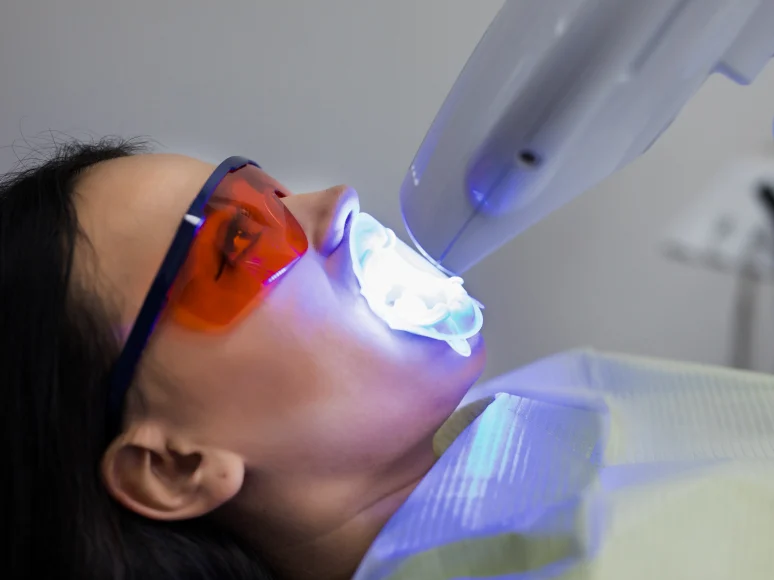
Dentists in Palmdale commonly use hydrogen peroxide or carbamide peroxide gels at concentrations higher than over-the-counter products. A typical session lasts 45–90 minutes and may include isolation of gums with a rubber dam or gingival barrier to prevent sensitivity.
Many practices offer LED or plasma light to accelerate whitening, though the primary whitening effect comes from the chemical gel. Providers often perform one to three sessions spaced a week apart, depending on initial tooth shade and desired results.
Immediate whitening of 3–8 shades is typical for patients without heavy intrinsic staining. For tetracycline or deep discoloration, dentists may recommend combined treatments such as internal bleaching or veneers.
Benefits of Custom-Tailored Care
A dentist evaluates enamel health, existing restorations, and gum condition before whitening. This assessment prevents complications like uneven color on crowns or increased sensitivity in areas of recession.
Custom trays and in-office protocols let clinicians control gel concentration and application time for each patient. That targeted approach reduces the risk of soft-tissue irritation and provides more predictable shade outcomes than store-bought kits.
Dental supervision also allows integration with other cosmetic work — for example, whitening natural teeth before replacing discolored composite or porcelain for a color match. Follow-up appointments ensure results last and address any post-treatment sensitivity quickly.
What to Expect During Your Visit
At the first appointment, a dental assistant or hygienist takes photos and records the tooth shade using a shade guide. They discuss goals, medical history, and any previous sensitivity or restorative work that could affect results.
During treatment, the clinician isolates soft tissue, applies the whitening gel, and monitors patient comfort. Patients may feel mild tingling or temporary sensitivity; clinicians offer desensitizing agents or adjust exposure time when needed.
Aftercare instructions include avoiding staining foods and drinks for 48–72 hours, using a sensitivity toothpaste, and scheduling touch-up trays or maintenance cleanings. The clinician provides an estimate of how long results should last and outlines options for future touch-ups if desired.
At-Home Whitening Solutions
These options let patients whiten teeth outside the office using either dentist-prescribed prescriptions or store-bought products. Each approach balances strength, cost, convenience, and sensitivity risk.
Dentist-Prescribed Kits
Dentists provide custom-fit trays and professional-strength carbamide peroxide or hydrogen peroxide gels, typically 10–22% carbamide peroxide (equivalent to about 3–7% hydrogen peroxide). Trays are made from impressions or digital scans to ensure even contact and reduce gum irritation.
Typical regimens run from nightly 30–60 minute wear for 1–4 weeks to daytime wear for shorter periods, depending on concentration. Dentists tailor strength and wear time for restorations, dental work, and history of sensitivity. They monitor progress and adjust treatment to avoid overuse.
Benefits include faster, more even whitening and lower risk of gum burns. Downsides are higher cost and multiple dental visits. Patients with crowns, veneers, or extensive restorations should consult their dentist because whitening affects only natural tooth structure.
Over-the-Counter Products
OTC options include whitening strips, paint-on gels, whitening toothpaste, and one-size-fits-most tray kits with lower-concentration peroxide (typically 3–10% hydrogen peroxide equivalent). Strips and trays are convenient and budget-friendly for mild to moderate staining from coffee, tea, or tobacco.
Results take longer than dentist-prescribed kits and vary by product adhesion and user consistency. Common side effects are temporary tooth sensitivity and mild gum irritation. Whitening toothpaste removes surface stains but does not change intrinsic color.
Choose products with the American Dental Association (ADA) Seal where available, follow instructions closely, and stop use if severe sensitivity or gum pain develops. For visible restorations, OTC products will not change shade, so matching may require professional guidance.
Comparing Convenience and Results
Dentist-prescribed kits deliver stronger, faster, and more predictable results because of custom trays and higher peroxide concentrations. They cost more and usually require supervising visits, but they better protect gums and restorations and allow adjustments for sensitivity.
OTC products offer easy access, lower upfront cost, and good results for surface stains with consistent use. They require careful application to avoid uneven whitening and often need longer treatment periods. Sensitivity risk increases if users overapply or leave products on longer than directed.
When choosing, weigh budget, desired speed of results, presence of restorations, and sensitivity history. Consulting a local Palmdale dentist helps match the right at-home plan to oral health needs and cosmetic goals.
Ensuring Your Comfort and Safety
This section explains practical steps to minimize sensitivity and how providers adapt whitening for different ages. It highlights specific products, timing, and screening measures patients should expect.
Managing Tooth Sensitivity
Providers assess sensitivity before whitening by asking about prior reactions, recent restorations, and gum recession. They often recommend a desensitizing toothpaste (5% potassium nitrate or 8% arginine) for two weeks prior to treatment to reduce nerve excitability.
In-office options include shorter activation times, lower-concentration gels, and application of topical fluoride varnish or desensitizing agents immediately after treatment. Patients with exposed dentin or active decay may be advised to delay whitening until those issues are treated.
At-home protocols can use custom trays with lower-percentage peroxide and alternating-day use to limit discomfort. If sensitivity appears, clinicians suggest pausing treatment for 48–72 hours and using over-the-counter desensitizers; persistent pain prompts a follow-up exam.
Safe Whitening for All Ages
Clinicians generally recommend professional whitening for adults and advise caution for teenagers whose teeth and gums are still developing. For patients under 18, many dentists prefer supervised, lower-concentration at-home systems or postponing treatment until enamel maturation unless there is a compelling reason.
The dentist screens for contraindications: pregnancy, untreated cavities, active periodontal disease, or restorations that won’t change color. A chart of common considerations:
- Candidate suitability: completed orthodontics, stable restorations, healthy gums
- Contraindications: pregnancy, lactation, active caries, severe enamel defects
- Adjustments: lower peroxide %, shorter sessions, protective barriers
Dentists document shade goals and realistic outcomes before starting. They also schedule a post-treatment check to evaluate sensitivity, shade stability, and any needed touch-ups.
Maintaining a Bright Smile Long-Term
Consistent daily care and small lifestyle changes preserve whitening results. Regular professional checkups and targeted habits help teeth stay bright without repeated aggressive treatments.
Proactive Oral Hygiene Tips
They should brush twice daily with a fluoride toothpaste designed for stain protection and use a soft-bristled brush to avoid enamel wear. Brushing for two minutes and angling the brush at 45° removes plaque at the gumline where discoloration often starts.
Daily interdental cleaning matters. Flossing or using interdental picks removes food and biofilm between teeth that can dull a smile. An antiseptic or fluoride mouthwash once a day reduces bacteria and strengthens enamel.
Consider periodic touch-ups with custom trays or dentist-provided at-home kits every 6–12 months instead of over-the-counter strips. Professional polishing at hygiene visits removes surface stains safely. If sensitivity occurs, use desensitizing toothpaste and consult the dentist to adjust treatment frequency.
Foods and Drinks to Enjoy or Avoid
They should limit dark-colored beverages like coffee, black tea, red wine, and cola, which contain chromogens that attach to enamel. When consumed, using a straw and rinsing with water afterward reduces contact time and staining risk.
Fruits like berries and beets can stain; eat them with meals and rinse afterward. Dairy products such as yogurt, cheese, and milk contain calcium and casein that support enamel and may help maintain brightness.
Avoid frequent snacking on acidic foods (citrus, soda) that soften enamel and make it more prone to staining. For stain-prone foods, follow with water, chew sugar-free gum to stimulate saliva, or brush after 30–60 minutes to protect enamel while keeping teeth white.
Choosing the Right Palmdale Dental Professional
Look for a dentist who combines clinical skill with clear communication, realistic expectations, and a focus on patient comfort. Prioritize credentials, office safety, and transparent pricing when deciding where to get teeth whitening in Palmdale.
Questions to Ask During Your Consultation
Ask whether the dentist is a licensed cosmetic dentist and how many in-office whitening procedures they perform monthly. Request specifics on the whitening system used (e.g., hydrogen peroxide percentage, LED adjuncts) and typical shade improvement patients achieve in one visit.
Request a full oral exam and a written treatment plan that lists pre-treatment needs like cavity repairs, gum disease treatment, or replacement of old restorations. Ask about side effects — frequency and management of sensitivity — and what desensitizing protocols they use, such as topical fluoride or potassium nitrate.
Clarify cost breakdowns: pre-treatment assessments, the whitening session, any take-home trays, and follow-up visits. Ask about warranty or touch-up policies and whether they provide custom trays versus over-the-counter options. Confirm appointment length and expected immediate aftercare instructions.
Signs of a Caring Dental Team
A caring team explains risks and alternatives before recommending whitening and tailors choices to the patient’s dental history and goals. They take time to review photos, shade guides, and previous restorations that might not respond to bleaching.
Staff should screen for gum disease and decay, referring or treating those issues first to avoid uneven whitening. Look for a practice that offers sensitivity prevention (pre-treatment desensitizers, reduced peroxide concentrations, or gradual in-office protocols).
Comfort measures matter: foam or gel anesthetics for gum protection, breaks during longer sessions, and clear post-op care instructions. Positive signs include clear pricing, polite scheduling, prompt follow-up on concerns, and verification of sterilization and OSHA/HIPAA compliance.
Exploring Modern Advances in Whitening
Patients in Palmdale now access faster, safer whitening with predictable results. These advances reduce sensitivity, require fewer visits, and fit different budgets and lifestyles.
Latest Technologies Used Locally
Local practices commonly use in-office LED-accelerated whitening and custom take-home trays with professional-strength carbamide or hydrogen peroxide gels. LED systems in Palmdale clinics typically use 25–35% hydrogen peroxide and deliver 45–60 minute sessions, producing noticeable shade changes in one or two visits.
Custom trays require an initial impression or digital scan; patients wear trays overnight or for 30–60 minutes daily depending on gel strength. This method offers gradual, controllable whitening with lower immediate sensitivity.
Providers also combine pulsed-light systems with desensitizing agents like potassium nitrate or fluoride varnishes to minimize discomfort. Many clinics offer pre-treatment consultations and shade-matching with spectrophotometers for objective results. Insurance rarely covers cosmetic whitening, so practices provide clear pricing tiers and financing options.
Emerging Trends in Cosmetic Dentistry
Minimally abrasive polishing pastes and nano-hydroxyapatite rinses aim to restore enamel luster while supporting remineralization. These adjuncts reduce reliance on high-concentration peroxide alone and help manage sensitivity after whitening procedures.
Biomimetic approaches—using peptides and remineralizing agents—are appearing in Palmdale practices to strengthen enamel before or after whitening, improving long-term shade stability.
Digital shade-mapping and AI-assisted case planning let dentists predict outcomes more accurately and tailor treatment length. Teleconsultations for follow-up and supervised home-whitening programs have grown, offering convenience for busy patients.
Patients should expect personalized plans that weigh current enamel condition, sensitivity history, and lifestyle (coffee, smoking) to choose the safest, most effective option.
Next Steps for a Confident, Brighter Smile
They should start by scheduling a consultation with a trusted Palmdale dental practice to assess tooth shade, sensitivity, and oral health. A short exam identifies stains that respond well to whitening and spots that need other care first.
Patients can choose between in-office whitening for faster results or take-home kits for gradual improvement. In-office treatments typically finish in one visit; take-home options allow control and reduced sensitivity.
Maintain results with simple daily habits: brush twice with a whitening toothpaste, floss daily, and limit staining foods like coffee and red wine. For visible stains, occasional touch-up trays or single in-office sessions can refresh the shade.
Discuss sensitivity and dental restorations during the appointment, since crowns and veneers won’t whiten the same way as natural teeth. The dentist can match restorations after whitening or recommend alternatives to achieve a uniform appearance.
Costs and financing options vary, so ask about pricing, payment plans, and what each option includes. Many practices offer clear breakdowns and can provide an estimate after the exam.
They are encouraged to call or message the dental office with questions or to book a visit. A brief consultation helps tailor a plan that balances comfort, safety, and the smile goals they want to reach.
Frequently Asked Questions
This section answers common concerns about professional whitening in Palmdale, including safety, expected longevity, treatment types, cost, stain removal, and how whitening interacts with restorations. It gives practical steps patients can take and realistic outcomes to expect.
Is professional whitening safe for my teeth and gums, and will it cause sensitivity?
Professional whitening performed by a licensed dentist uses controlled concentrations of hydrogen peroxide or carbamide peroxide and protective barriers for gums. This reduces the risk of chemical irritation compared with over‑the‑counter products.
Mild, temporary sensitivity is common for a day or two after treatment, especially with in‑office procedures. Dentists can apply desensitizing agents or recommend toothpaste with potassium nitrate to manage discomfort.
Patients with active tooth decay, gum disease, or very thin enamel should address those issues before whitening. A dental exam and cleaning ensure whitening proceeds safely and predictably.
How long do whitening results usually last, and what can I do to keep my smile bright?
In‑office whitening results typically last from 6 months to 3 years, depending on diet and habits. Take‑home maintenance trays and occasional touch‑up gels can extend results significantly.
Avoiding frequent coffee, red wine, and tobacco reduces re‑staining. Brushing twice daily with a whitening toothpaste and regular professional cleanings also help preserve brightness.
What’s the difference between in-office whitening and take-home trays from my dentist?
In‑office whitening uses stronger bleaching agents and light or heat activation for faster, more noticeable results in one or two visits. It suits patients who want quick improvement or have significant discoloration.
Take‑home trays use lower concentrations for gradual whitening over one to two weeks and provide flexible, comfortable maintenance. Dentists custom‑fit trays to ensure even contact and reduced gum irritation.
How much does teeth whitening typically cost, and are there financing or special options available?
In Palmdale, in‑office whitening commonly ranges from $400 to $900 per session, depending on the practice and technology used. Dentist‑provided take‑home kits generally cost between $150 and $350.
Many dental offices offer financing plans, membership programs, or seasonal promotions to spread cost. Patients should ask the office about payment options and whether a consultation or exam fee is included.
Can whitening remove coffee, tea, or tobacco stains, and what if I have deeper discoloration?
Bleaching treatments effectively lighten surface and some intrinsic stains caused by coffee, tea, and tobacco. Results vary with stain age and depth; newer surface stains respond best.
Deeper intrinsic discoloration from trauma, medications (like tetracycline), or genetics may only partially respond to bleaching. In those cases, veneers or porcelain restorations provide predictable color improvement.
Will whitening work if I have crowns, veneers, or fillings—and what are my options if they don’t match?
Whitening agents do not change the color of ceramics, composite fillings, crowns, or veneers. Natural teeth will lighten while restorations remain the same shade, which can create a mismatch.
Options include whitening natural teeth first, then replacing restorations to match the new shade, or choosing restorations that anticipate future whitening. A dentist can plan sequencing to achieve a uniform appearance and discuss costs and timelines.